


Why Do Some Australian Paint Brushes Have a Metal Plate Inside the Ferrule?
Why Do Some Australian Paint Brushes Have a Metal Plate Inside the Ferrule?
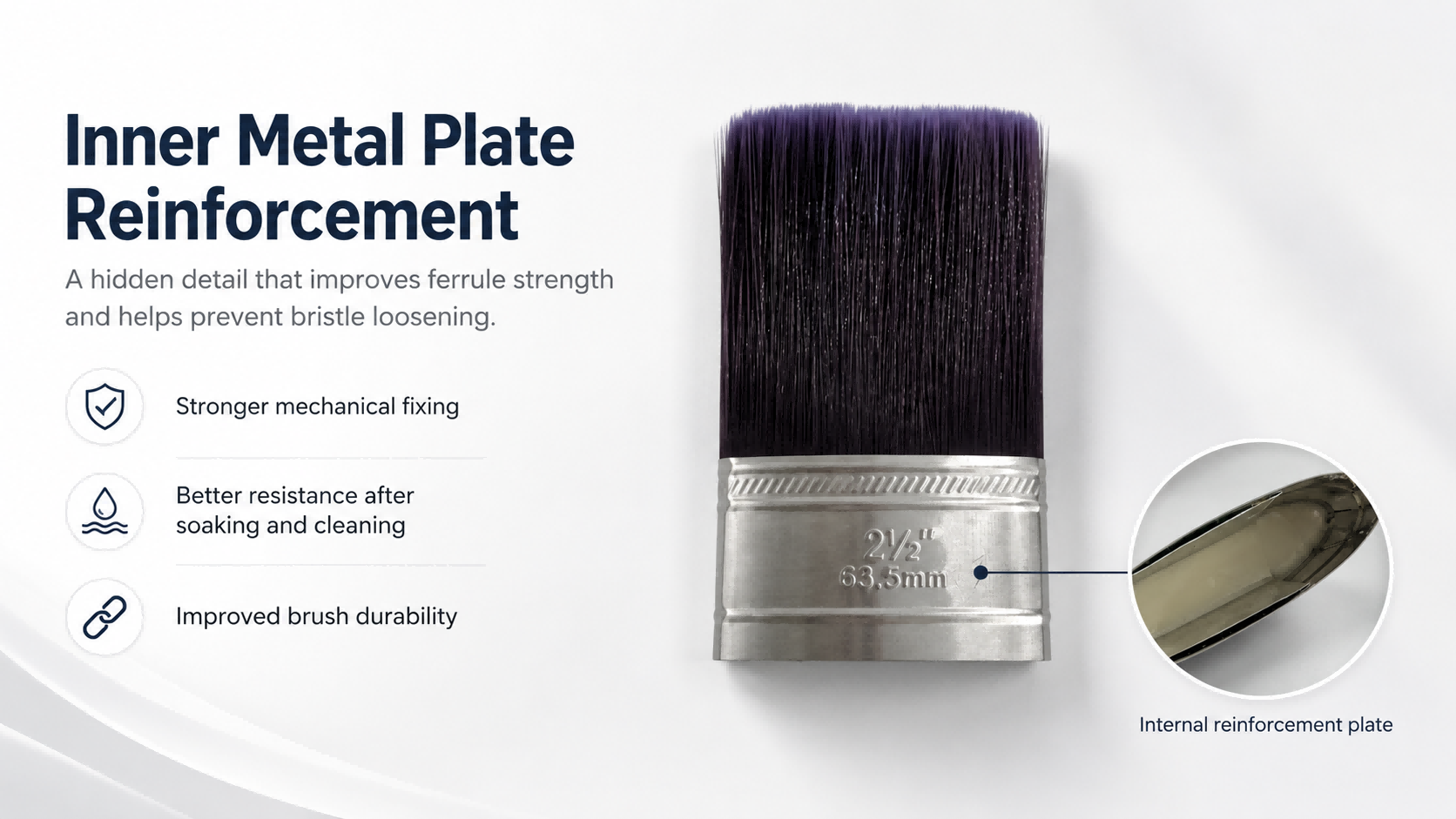
When examining a traditional Australian-style paint brush, you may notice a small metal plate positioned inside the ferrule. Although this component looks simple, it plays an important role in improving the strength and durability of the brush.
This design originated from the construction methods used in traditional paint brushes.
The Problem with Traditional Tinplate Ferrules
Many paint brushes produced several decades ago used tinplate ferrules. Tinplate was economical and easy to form, but it also had several limitations.
When a paint brush was repeatedly exposed to water, paint thinner, or cleaning solvents, the metal ferrule could gradually corrode. At the same time, the bonding strength of traditional epoxy adhesives was not always sufficient to withstand repeated soaking, cleaning, and bending during use.
As a result, the cured adhesive block and the bristle bundle could gradually separate from the metal ferrule. In serious cases, the entire brush head could become loose or pull away from the ferrule.
The Purpose of the Inner Metal Plate
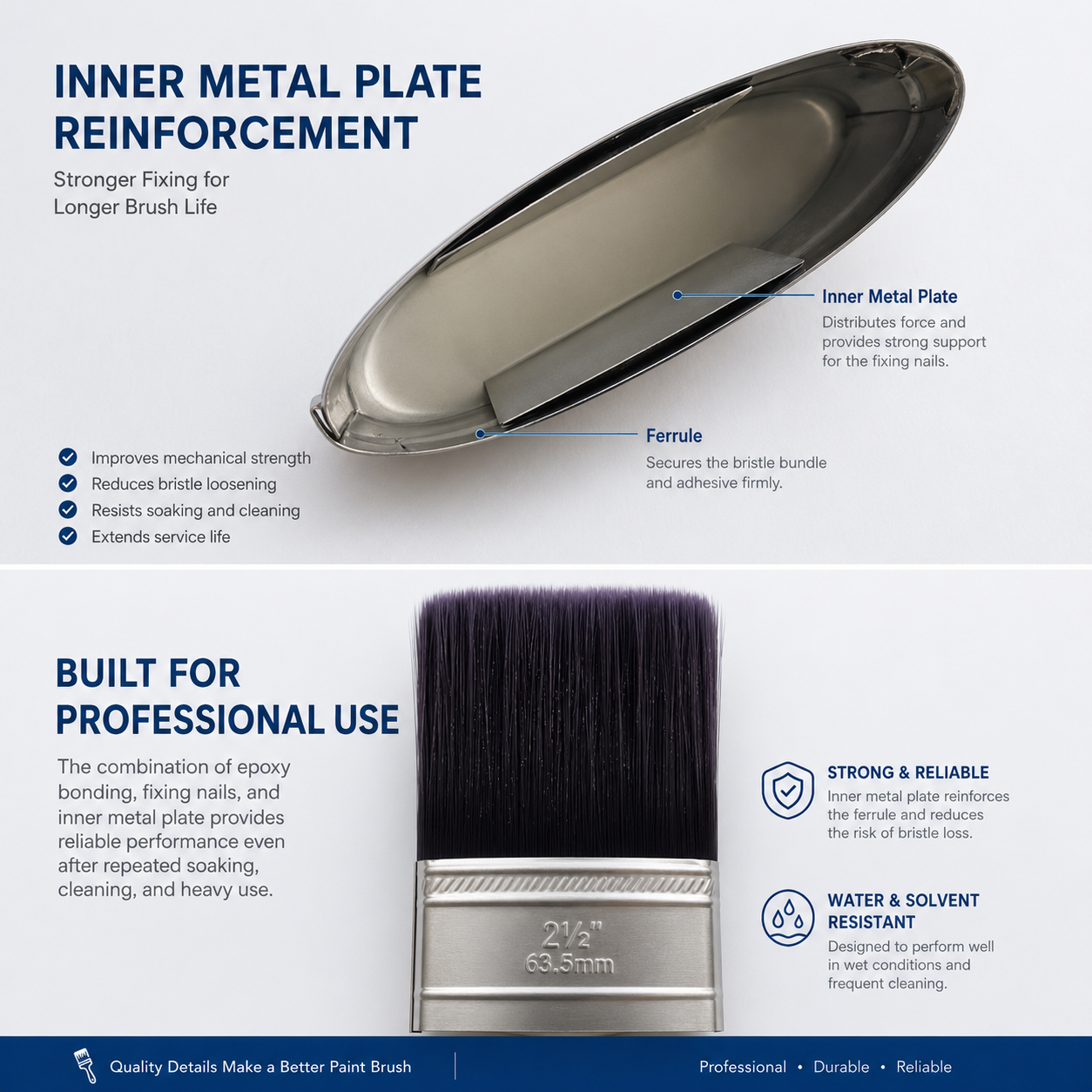
To solve this problem, manufacturers added a separate metal reinforcement plate inside the ferrule before pouring the adhesive.
After the bristles were placed inside the ferrule, the reinforcement plate was positioned against the inner wall. Adhesive was then poured into the ferrule to lock the bristles in place.
Metal nails or fixing pins were driven through the outer ferrule and secured against the internal reinforcement plate.
This construction created both:
· Adhesive bonding, provided by the cured epoxy resin;
· Mechanical fastening, provided by the nails and internal metal plate.
Even if the adhesive strength decreased after repeated soaking or cleaning, the mechanical fixing structure helped prevent the bristle bundle and adhesive block from separating from the ferrule.
Why Not Fix the Nail Directly to the Ferrule?
The wall of a tinplate ferrule is relatively thin. If a nail is fixed only through the ferrule, the surrounding metal may deform, loosen, or tear under repeated stress.
The internal plate increases the effective thickness of the fastening area and distributes the force across a larger surface.
It therefore helps to:
· Prevent the nail from pulling through the thin ferrule;
· Reduce deformation around the fastening point;
· Hold the cured adhesive block more securely;
· Improve resistance to water soaking and repeated cleaning;
· Extend the service life of the paint brush.
A Traditional Design That Still Has Value
Modern adhesives are generally stronger and more water-resistant than the materials used many years ago. However, professional paint brushes are still exposed to demanding conditions.
During painting, the bristles are repeatedly bent in different directions. After use, the brush may be soaked in water or solvent and cleaned many times. These actions continuously place stress on the connection between the bristle bundle, adhesive block, and ferrule.
The internal reinforcement plate provides an additional level of security. It does not simply support the adhesive—it creates a second mechanical connection inside the brush head.
For this reason, the metal plate remains a recognizable feature of some traditional Australian-style paint brushes, especially products designed for professional use and long service life.
Small Component, Important Function
The metal plate inside the ferrule may be hidden after the brush is assembled, but its purpose is very practical.
By combining epoxy bonding with mechanical fastening, the structure reduces the risk of the brush head becoming loose after repeated use and cleaning.
It is a good example of how a small structural detail can make a meaningful difference in the durability and performance of a paint brush.


