


4 Kinds of Main Brush Material
The brush is generally composed of bristles and handles. What kind of hairs are used for the bristles, bristles, horse hair, wool, chemical fiber silk (nylon hair)
Brushes are essential tools in many industries, from painting and makeup application to cleaning and fur care. The construction of a brush typically consists of two main parts: the bristles and the handle. The bristles can be made from a variety of materials, each with distinct properties and characteristics. The four main types of bristle materials are natural hairs—such as bristles, horsehair, and wool—and synthetic fibers, such as nylon. These materials differ in their texture, durability, and paint or fluid absorption capacity, making them suitable for different purposes.
What are their differences and characteristic?
What is Bristle?
Bristles are commonly derived from the hair of pigs and are widely used in paint brushes. The bristles are slightly split at the tip, which allows them to absorb and hold paint more effectively. This split structure also gives bristles larger pores, contributing to their strong paint absorption and controlled paint release. Because of these properties, bristles are highly effective for applying paint in a smooth and even manner.
What is Horsehair?
Horsehair is another natural bristle material that is divided into two types: horsetail and mane horsehair. Horsetail hair is generally stiffer and more resilient than mane horsehair. Horsehair is commonly used for shoe brushes and brooms because of its durability and ability to retain shape. However, it lacks a natural point at the tip, which means it must be folded in half during the production process of brushes. This material is ideal for sweeping or polishing tasks where stiffness and resilience are needed.
What is Wool?
Wool is a soft, fine fiber commonly used in brushes for delicate applications, such as makeup brushes and wool brushes for fur care. The softness of wool allows for gentle application, making it suitable for tasks requiring precision and care. It is often used in beauty and grooming products where sensitivity to the skin or fur is paramount.
What are Synthetic Fibers?
In recent years, synthetic fibers have gained popularity as a replacement for natural bristles, horsetails, and wool. This shift is driven by two main factors: the scarcity of natural raw materials and the growing demand for affordable, durable alternatives. Synthetic fibers, such as nylon, are used to replicate the characteristics of natural bristles, horsetails, and wool. These materials are more consistent in quality and often more affordable, while still offering similar performance.
What is Chemical Fiber Silk?
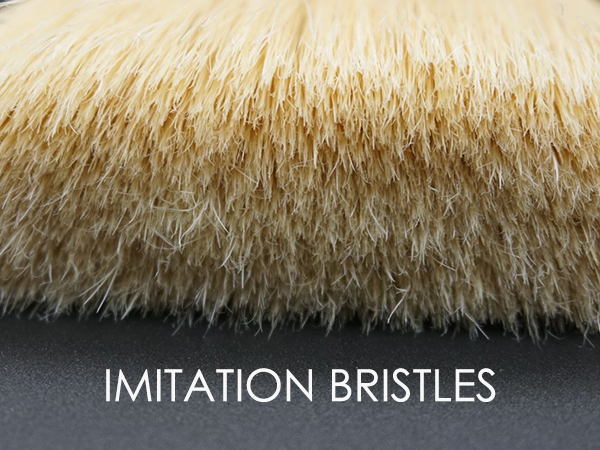
Furthermore, chemical fiber silk has evolved to mimic natural bristles, horsetails, and wool. These synthetic fibers are categorized as imitation bristles, imitation horsetails, and imitation wool, each designed to emulate the texture and function of their natural counterparts. Synthetic fibers are not only cost-effective but also more environmentally sustainable due to their long-lasting properties and consistent availability.
In conclusion, the choice of bristle material plays a critical role in determining the effectiveness and suitability of a brush for specific tasks. Whether using natural fibers like bristles, horsehair, and wool, or opting for synthetic alternatives, understanding the characteristics of each material helps ensure that the right brush is selected for the job.


