


Paint Brush Materials Guide: How to Choose the Right Filament, Ferrule, Handle and Packaging
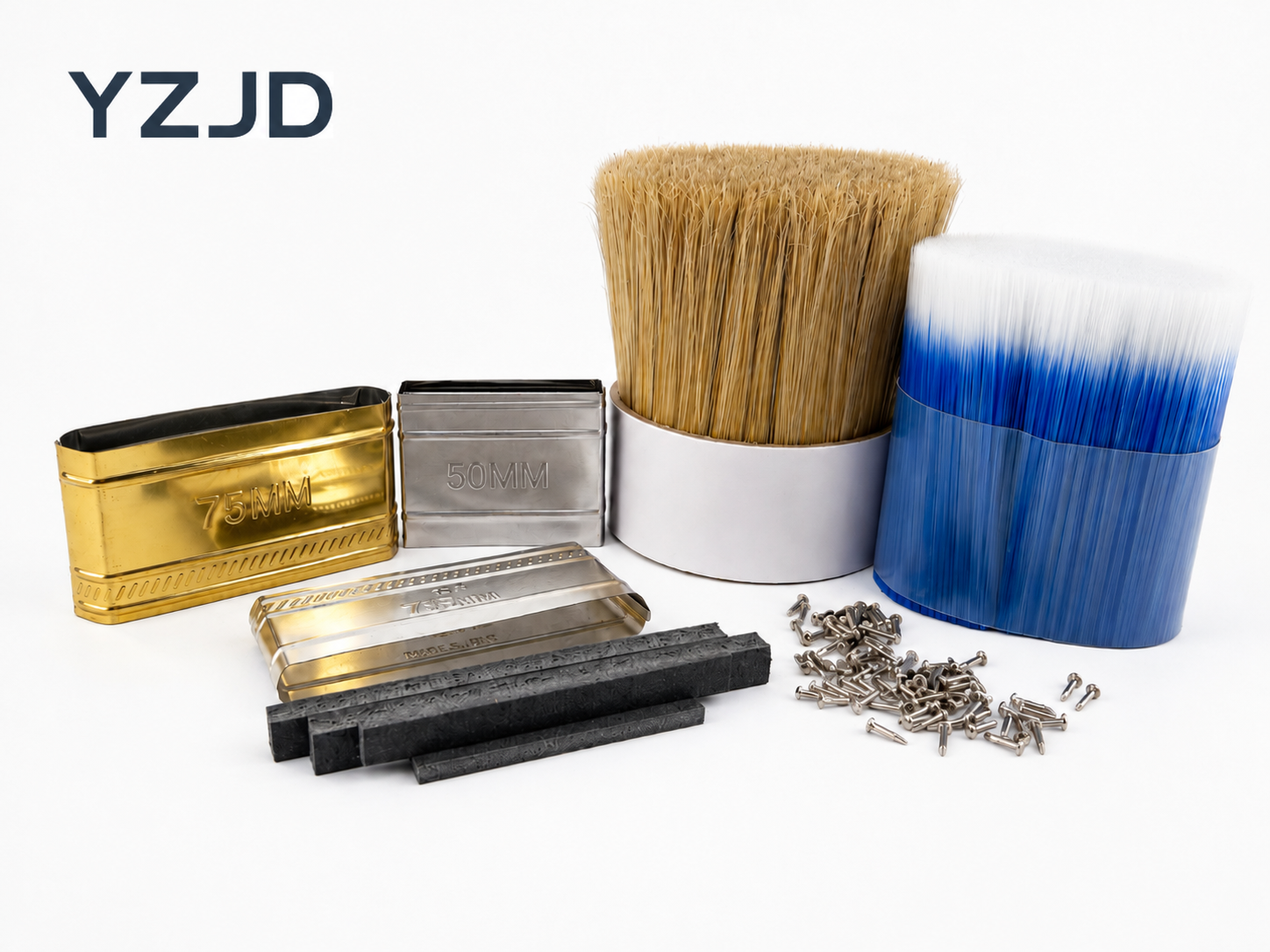
This guide explains how to choose the right paint brush materials, including bristle, filament, ferrule, plastic wedges, adhesive, handle, nails and packaging.
Choosing the right materials is the first step to producing a good paint brush. For customers who are preparing to start paint brush production, understanding the function and quality level of each component is very important.
A paint brush may look simple, but its performance depends on many details, including the filament, ferrule, plastic wedges, adhesive, handle, nails and packaging. Different materials will directly affect the brush quality, painting performance, durability, cost and market positioning.
We provide one-stop material solutions for paint brush production. Whether you are developing economy paint brushes, mid-range paint brushes or high-end professional paint brushes, we can help you choose suitable materials according to your market, paint type, target price and quality requirements.
1. BRISTLE SELECTION
For a paint brush, the filament is the most important part. Different types of paint, application areas and market levels require different filament materials.
In the past, most paint brushes were made with natural pure bristle, because oil-based paints were widely used at that time. With the development of water-based paints, eco-friendly paints and synthetic filament technology, materials such as PBT, PET, nylon and synthetic bristle imitation filaments have gradually become widely used in the paint brush industry.
The main brush filament options are as follows:
Natural Bristle
Natural bristle is commonly used for high-end paint brushes. It has good elasticity, paint holding capacity and heat resistance. It is especially suitable for high-quality oil-based paint brushes.
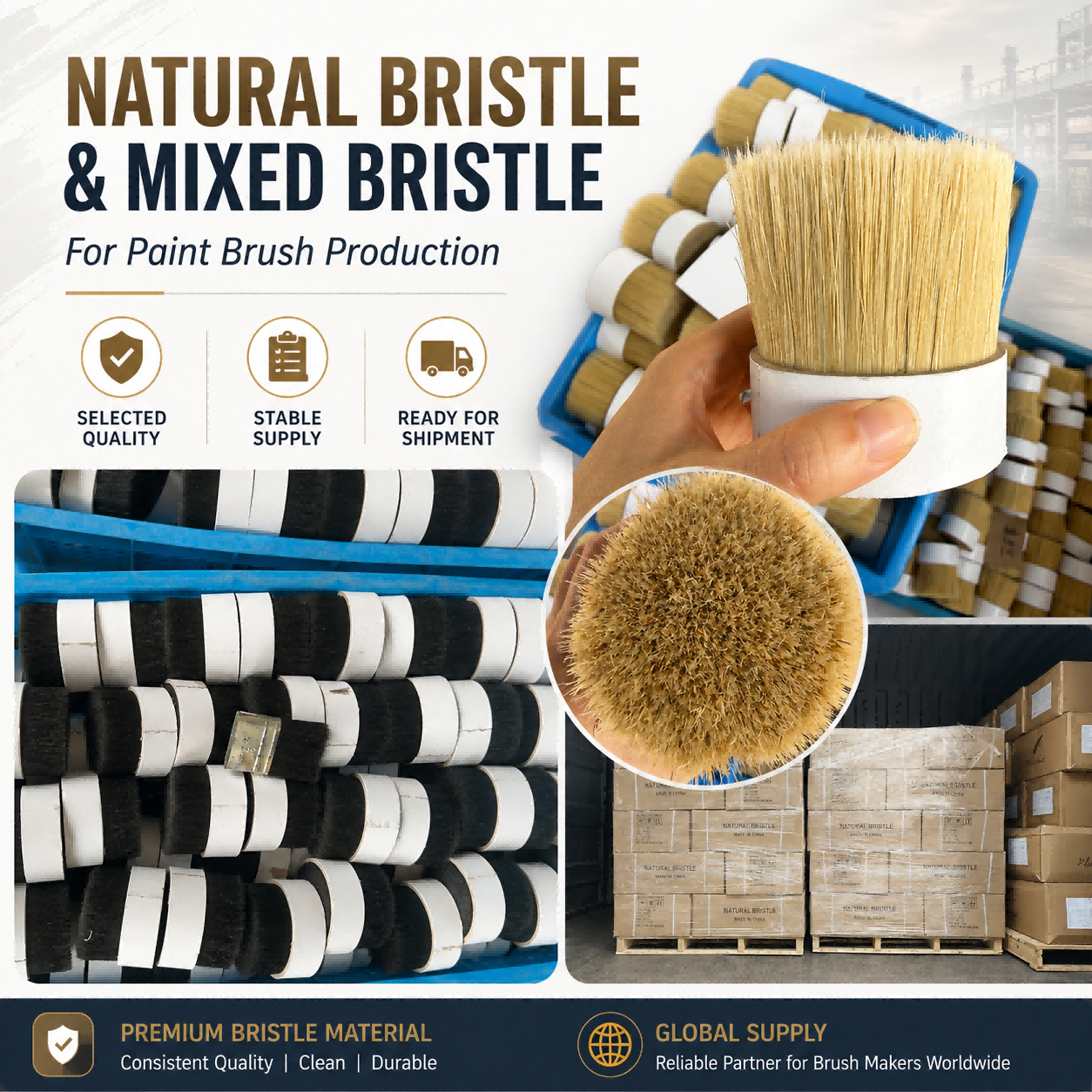
Bristle Mixture Filament
Bristle mixture filament is made by mixing natural bristle with synthetic filament. It offers a good balance of brushing performance, elasticity and cost. It can be used for both water-based and oil-based paints.
High Imitation Bristle Filament
High imitation bristle filament is designed to replace bristle mixture filament. Its appearance and brushing feeling are close to natural bristle. It is suitable for both water-based and oil-based paints and is now a popular alternative material in many markets.
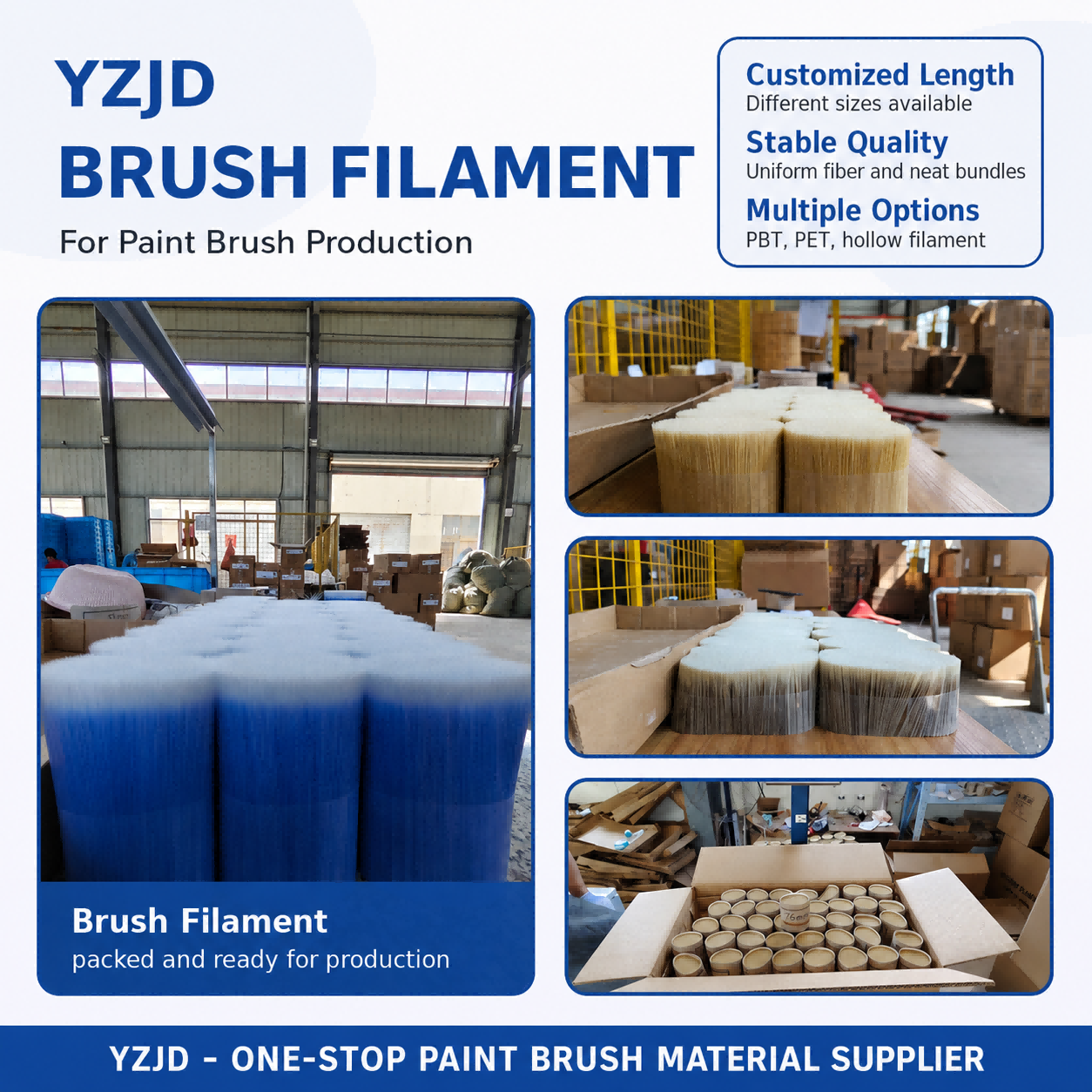
Regular PBT / PET Filament
Regular PBT and PET filaments are widely used in the water-based paint brush market. They are economical and suitable for economy and mid-range paint brushes.
Nylon Filament
Nylon filament has good elasticity and wear resistance. It is mainly used in the American market and is also suitable for mid-range and high-end synthetic paint brushes.
2. Paint Brush Size Selection
Common paint brush sizes include:
· 1 inch
· 1.5 inch
· 2 inch
· 2.5 inch
· 3 inch
· 4 inch
Different sizes are suitable for different applications.
Small paint brushes are suitable for corners, edges, details, furniture and wood painting. Larger paint brushes are suitable for walls, doors, windows, wooden boards and other large-area painting jobs.
Customers can choose different size combinations according to their target market, application and sales channel.
3. Brush Type Selection
Different brush types can be selected according to the application.
Flat Paint Brush
Flat brushes are suitable for general wall painting, wood painting and large-area applications. They are the most common type of paint brush.
Angle Paint Brush
Angle brushes are suitable for corners, edges, doors, windows and detailed areas. They provide better control during painting.
Wall Brush
Wall brushes are designed for large-area wall painting. They usually have a wider brush head and better paint holding capacity.
Wood Paint Brush
Wood paint brushes are suitable for furniture, wooden doors, wooden boards and other wood surfaces. They usually require softer filaments and better control of brush marks.
Cleaning Brush or Multi-Purpose Brush
According to customer requirements, different filament materials and brush structures can also be used for cleaning, dust removal or other special applications.
4. Filament Length and Brush Thickness
In addition to filament material, filament length, brush thickness and filament density also affect the performance of a paint brush.
Filament Exposed Length
The exposed length of the filament affects flexibility, softness and brushing feeling. A longer exposed length usually makes the brush softer and increases paint holding capacity. A shorter exposed length provides stronger control and a firmer brushing feeling.
Brush Thickness
Brush thickness affects the fullness and paint holding capacity of the brush. A thicker brush looks fuller and holds more paint, but the cost will also be higher.
Filament Density
Filament density affects painting smoothness, durability and overall brush quality. High-end paint brushes usually require better filament density, elasticity and trimming quality.
Therefore, when developing a paint brush, it is important to choose the right filament length, brush thickness and density according to the product level, target price and application.
5. Ferrule Selection
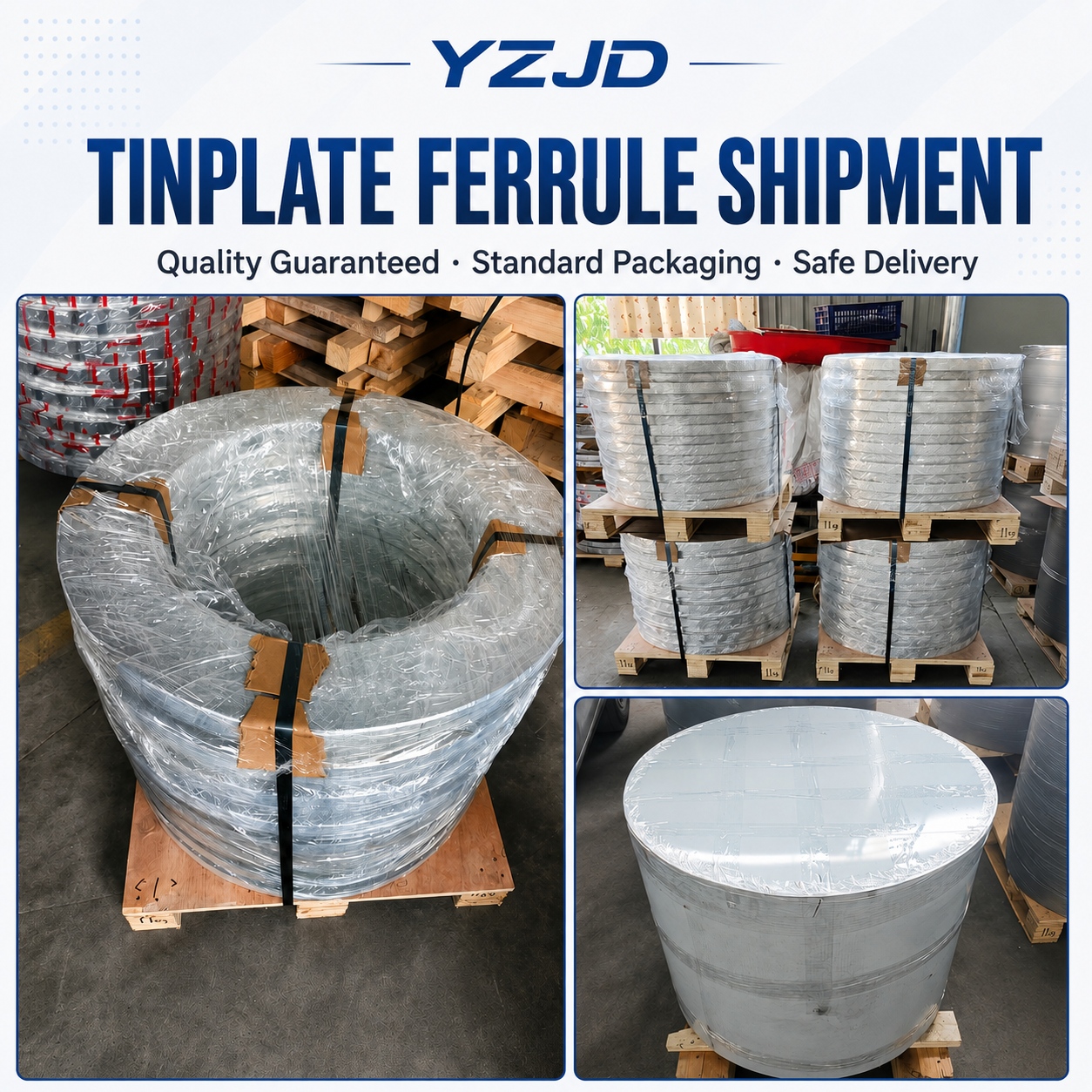
The ferrule is an important part of a paint brush. It holds the filament and connects the brush head with the handle. Common ferrule materials include tinplate and stainless steel.
Tinplate Ferrule
Tinplate is widely used for regular paint brushes. A common specification is 0.28 mm x 35 mm. The 0.28 mm thickness is a balanced option, offering suitable strength and good cost performance.
Stainless Steel Ferrule
Stainless steel ferrules are usually used for high-end paint brushes. They have better rust resistance and a more premium appearance, making them suitable for customers and markets with higher quality requirements.
6. Plastic Wedges
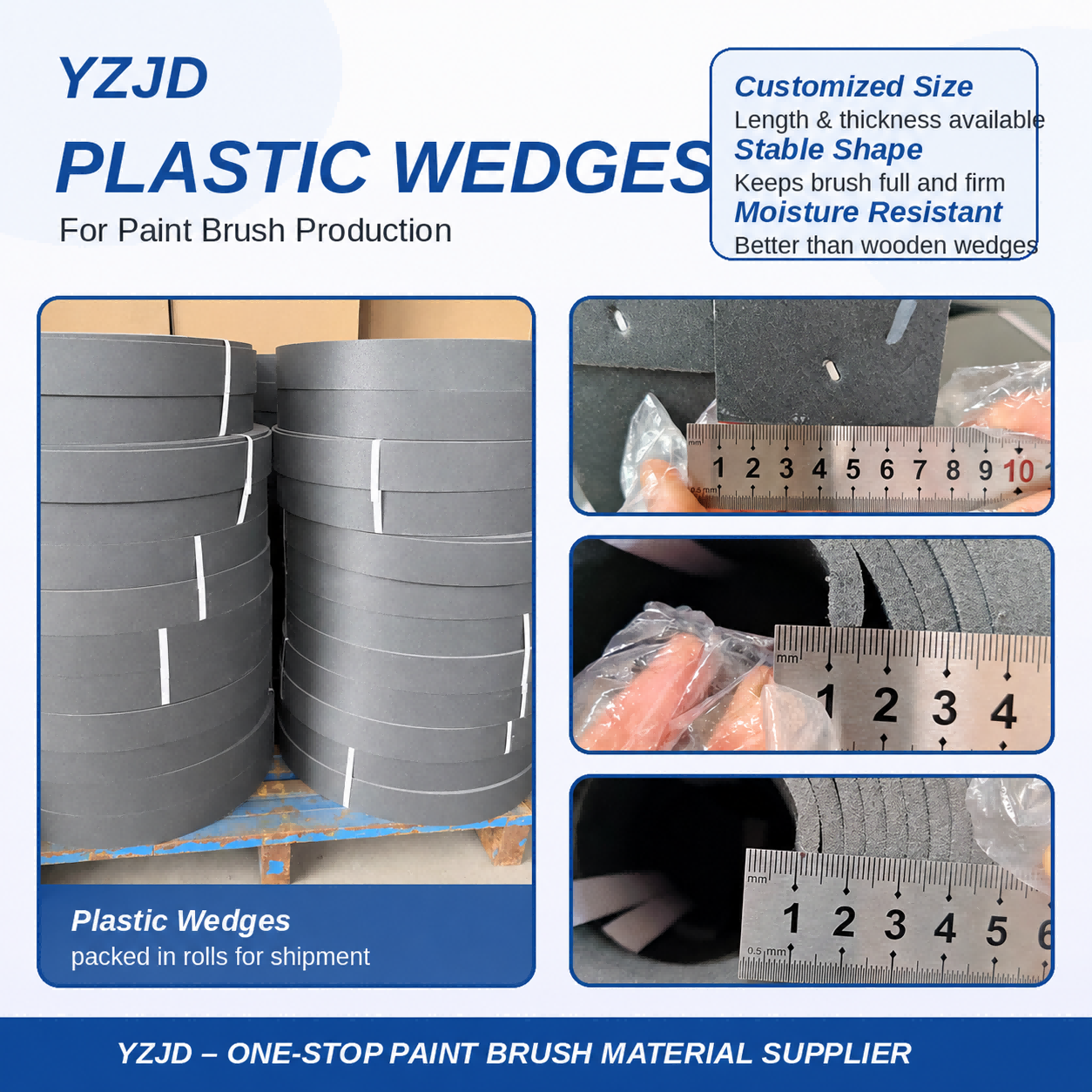
In the past, wooden wedges were often used inside paint brushes. However, wood can easily deform, absorb moisture or become moldy.
Today, most paint brushes use plastic wedges. The thickness can be customized according to the brush structure. Common thicknesses include 2 mm, 4 mm and 6 mm.
Different ferrule sizes, brush thicknesses and brush structures require different wedge thicknesses. Suitable plastic wedges help keep the brush full, stable and well-shaped.
7. Adhesive Selection
Adhesive directly affects the bonding strength and service life of a paint brush.
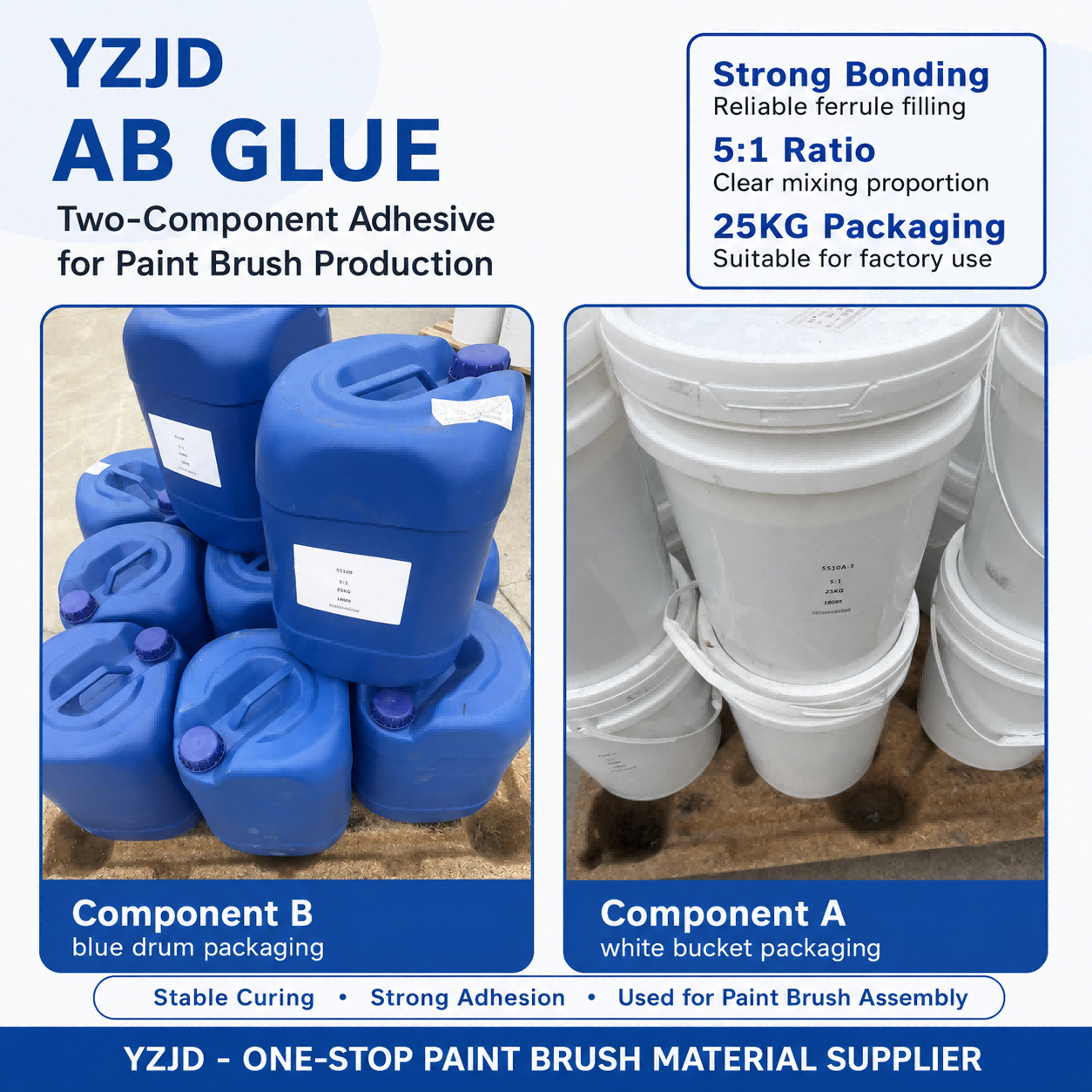
In the past, traditional epoxy adhesive was commonly used. However, it requires careful handling during production. Today, many customers prefer two-component adhesive, often called AB glue. It is easier to use, safer for production and provides good bonding strength after curing.
In addition, 109 adhesive is usually used for economy paint brushes. It has a lower cost and is suitable for price-sensitive markets.
8. Paint Brush Handle Selection
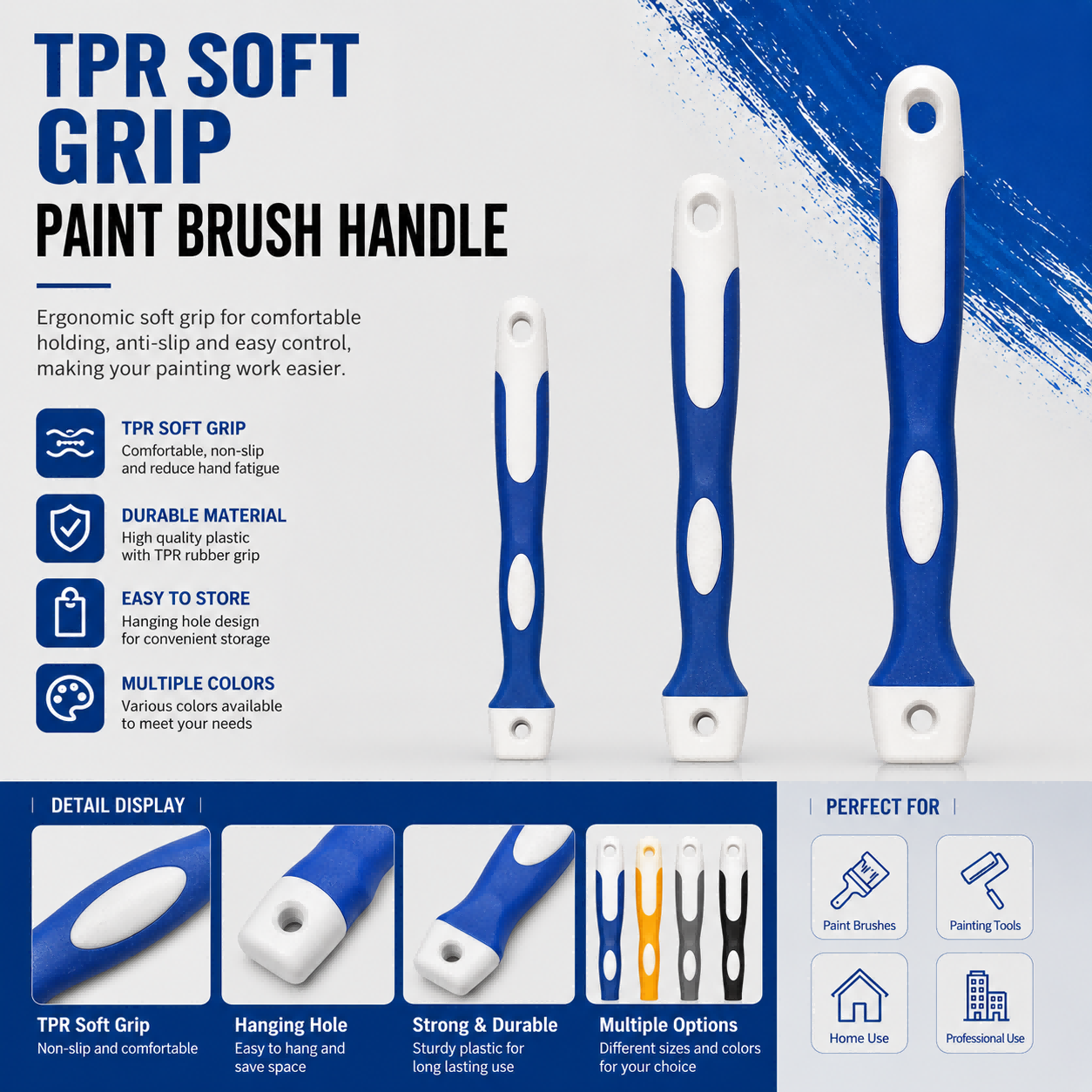
Common paint brush handle materials include plastic, wood and rubber.
Plastic Handle
Plastic handles can be hollow or solid. They are economical and available in many colors and designs.
Wooden Handle
Common wooden handle materials include beech wood, rubber wood and poplar wood. Among them, beech wood has a better appearance, stronger structure and better hand feeling. It is usually used for mid-range and high-end paint brushes.
Rubber Handle
Rubber handles provide a comfortable grip and good anti-slip performance. Customers can choose different styles and colors. If a special design is required, customized molds can also be developed.
9. Nails
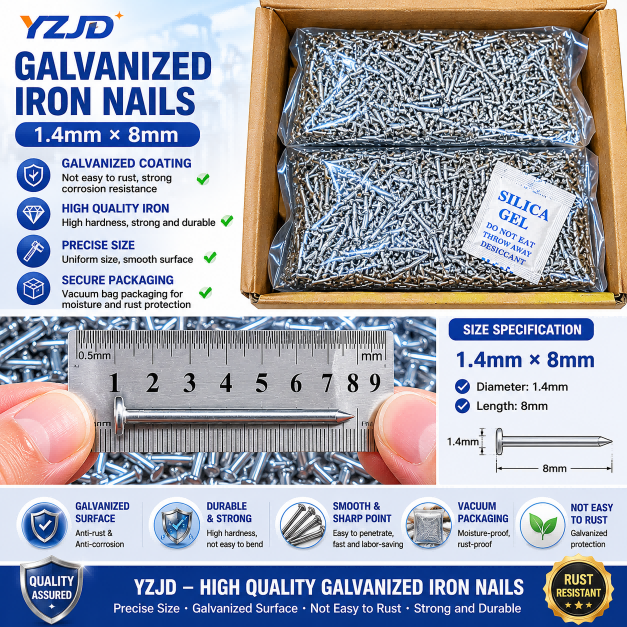
Common nail specifications for paint brushes include:
· 1.4 mm x 7 mm
· 1.4 mm x 8 mm
· 1.4 mm x 9 mm
Galvanized nails are commonly used to improve rust resistance and ensure a strong connection between the ferrule and the handle.
10. Packaging Options
Packaging can be selected according to the target market, sales channel and product level.
OPP Bag
OPP bag is the simplest and most economical packaging option. It is suitable for regular paint brushes and bulk products.
PVC Hanging Card
PVC hanging card is suitable for supermarkets, hardware stores and retail display. It makes the product easier to hang and display.
Color Sleeve
Color sleeve packaging is usually used for mid-range and high-end paint brushes. It can include brand information, product size, instructions and other details. It helps improve the product image and brand value.
11. Material Solutions for Different Market Levels
Customers can choose different material combinations according to their target market and budget.
Economy Paint Brush
Suitable for price-sensitive markets and general use.
Recommended materials:
· Regular PBT / PET filament
· Tinplate ferrule
· Regular plastic handle
· 109 adhesive or economy adhesive
· OPP bag packaging
Mid-Range Paint Brush
Suitable for hardware stores, building material markets and general retail channels. It offers a balance between quality and price.
Recommended materials:
· Bristle mixture filament or high imitation bristle filament
· 0.28 mm tinplate ferrule
· Wooden handle or better plastic handle
· AB glue
· PVC hanging card or regular color sleeve packaging
High-End Paint Brush
Suitable for brand customers, professional markets, supermarkets and customers with higher quality requirements.
Recommended materials:
· Natural bristle, high-quality bristle mixture filament or high-quality imitation bristle filament
· Stainless steel ferrule
· Beech wood handle or customized rubber handle
· High-quality AB glue
· Color sleeve or customized brand packaging
12. Sample and Customization Service
If customers already have their own samples, drawings or target prices, we can help develop suitable material solutions according to their requirements.
We can provide recommendations based on the following information:
· Target market
· Paint type, such as water-based paint or oil-based paint
· Target price
· Brush size
· Filament material requirements
· Ferrule material and size
· Plastic wedge thickness
· Handle style
· Packaging method
· Color, logo or special structure requirements
For customers who are just starting paint brush production, we can provide one-stop support from material recommendation and sample development to bulk supply. This helps customers save time, reduce trial costs and quickly find the right product solution for their market.
One-Stop Material Supply for Paint Brush Production
Choosing the right materials is the first step to making a good paint brush.
Whether you are developing economy paint brushes, mid-range paint brushes or high-end customized paint brushes, we can provide professional material suggestions and stable supply according to your market needs.
Customers are welcome to send us samples, drawings or target prices. We will recommend suitable brush filaments, ferrules, plastic wedges, adhesives, handles, nails and packaging solutions according to your requirements.
FAQ Section
What is the most important material in a paint brush?
The bristle or filament is the most important material in a paint brush. It directly affects paint holding capacity, elasticity, smoothness, durability and overall painting performance.
Which filament is suitable for water-based paint?
PBT and PET filaments are widely used for water-based paint brushes. High imitation bristle filament and bristle mixture filament can also be used depending on the quality level and market requirement.
What is the difference between tinplate ferrule and stainless steel ferrule?
Tinplate ferrules are economical and widely used for regular paint brushes. Stainless steel ferrules have better rust resistance and a more premium appearance, so they are usually used for high-end paint brushes.
Why are plastic wedges used in paint brushes?
Plastic wedges help keep the brush full, stable and well-shaped. Compared with wooden wedges, plastic wedges are less likely to deform, absorb moisture or become moldy.
Can paint brush materials be customized?
Yes. Paint brush materials can be customized according to the customer’s sample, drawing, target price, brush size, filament type, ferrule size, handle style and packaging requirement.


